By Nourish President Jo-Ann McArthur
Ask yourself this: Do you love your brand?
It sounds like a simple question. But in an era of consumer skepticism and extreme scrutiny of every social media post, if your answer isn’t genuinely “yes,” it’s getting harder to fake.
There’s a marketing term in the tech world I love—“dogfooding.” It’s the practice of a company using its own products to prove their quality. The term traces back to a 1970s Alpo commercial in which the spokesperson, Canadian actor Lorne Greene, fed the product to his own dogs to prove it was good enough for yours. When you think about it, it’s the ultimate test of integrity for a food brand. Would you actually consume what you sell or give it to your loved ones?
The "Bite" Heard 'Round the World
Featuring the head of your company in your ads is nothing new, though you might think it from some of the chatter on LinkedIn.
Those of us old enough to remember (or who are students of marketing) probably recall Lee Iacocca appearing in Chrysler ads during his time leading the car brand. In the foodservice business, Dave Thomas, founder of Wendy’s, became a veritable mascot, appearing in over 800 commercials.
Done right, this type of marketing creates authenticity and fosters trust in a brand.
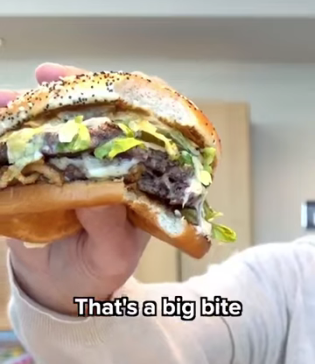
Recently, a video of McDonald’s CEO Chris Kempczinski went viral for all the wrong reasons. Attempting to promote the new "Big Arch" burger, he took a bite so microscopic that the burger remained essentially untouched. (I’ll give you the link a little later, in case you haven’t seen it.)
“That’s a big bite for a Big Arch,” he declared. It was not.
For a brand whose loyalty is based largely on craveability, it was a Big Fail.
Why Authenticity Matters in Food Marketing in 2026
In our 2026 Nourish Trend Report, we call this surging wave of authenticity "The Return to Real." When a brand’s leadership can’t authentically engage with what they’re putting on a shelf or serving to a customer, it makes them seem phony and disingenuous. And you simply cannot afford to sacrifice integrity in today’s consumer climate.
Here are some of the red flags on clear display in the video:
- Scripted vs. Sincere: People can smell "corporate theatre" from a mile away. If you don’t use the experience you're selling, trust evaporates instantly. Nobody who sees this video believes his oddly emphatic claim that the burger, fries, and soft drink are his lunch.
- The Price Gap: As one critic noted, the video was funny because it confirmed a suspicion: a man earning $20 million a year selling an $11 combo meal doesn't seem to actually eat that meal. (Truthfully, he didn’t look like he’d even held a burger before.) In 81 seconds, the distance between those two numbers became visible.
- Food is Not a Widget: Food is intimate. It nurtures, nourishes, and elicits feelings in us. When you refer to it as a "product" to be optimized rather than food for people to connect with emotionally, you lose the heart of the brand.
What Can Brand Leaders Learn From This?
There are some trying to spin this as a clever and intentional marketing stunt. I’m not buying it, and I would never risk that as a strategy, in any case. Taking that stance seems like a marketing stunt in itself—argue a contrary position on a hot topic, and watch your LinkedIn post rack up impressions and engagements.
What we can do, instead, is pull out a few takeaways. Here are some do’s and don’ts for any brand leaders looking to participate in their company’s marketing.
- Stop "Product-Speaking": When leadership calls your food a "unit" or "SKU" instead of a meal, your consumers will feel that coldness. Save that kind of talk for your commercial buyers.
- Commit to the Bite: If you're going to demonstrate your food, eat it like you mean it. Several competing CEOs did exactly that in the wake of this video’s release.
- Bridge the Gap: Ensure there is no "distance" between the executive suite and the tray on the counter. Stay close to your “product” and your consumers by rubbing elbows with them, serving them, and eating with them. What better way is there to truly understand your brand?
- Ask for Feedback: Not one person in the room saw, heard, or felt what was going on? Not likely. It’s easy to imagine, however, that no one was about to challenge the CEO of McDonald’s on how he ate a hamburger. As a leader, have the self-awareness and the humility for a gut check and guidance from the people you pay to make your marketing work.
Just For Fun, Who Bit It Better?
We’ll let you be the judge. Is it the choreographed "nibble" or the genuine "I-actually-like-this" gusto? Which one helps you connect with a brand, and which “product” are you more excited about trying?
The "Safe" CEO Nibble: McDonald’s CEO Chris Kempczinski
vs.
The Real Deal: T&T’s Tina Lee
Now that’s a CEO bite!